
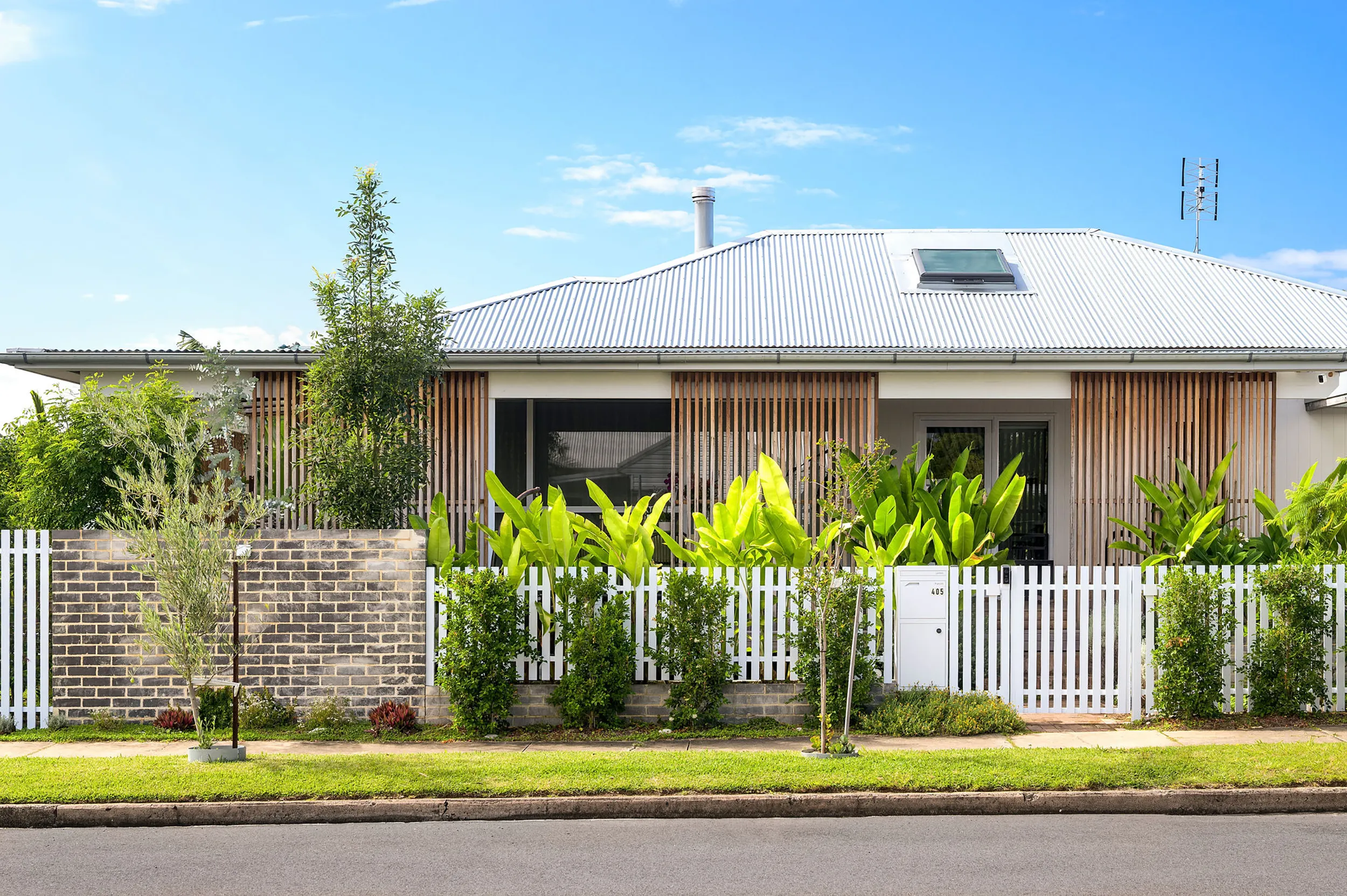
There is a particular frustration that comes with living in an older Newcastle home. It’s July, the heater has been running since breakfast, but the back bedroom still feels like a fridge. Or it is February, the sun went down two hours ago, and the house is still radiating heat like an oven.
This is not just bad luck. It is a design problem, and the good news is that it is a solvable one.
Having worked with Federation cottages, post-war bungalows, and 1970s and 80s brick homes, this is one of the most common conversations had with homeowners. They have lived with these problems for years, often assuming it is just what older homes are like. It does not have to be.
Older homes were built long before insulation was standard. Pre-war weatherboard and fibro homes leak heat in every direction during winter. Post-war brick homes absorb heat all day and release it overnight, keeping you awake long after dark. 1970s and 80s homes are often the trickiest: large west-facing windows, dark brick, and low-pitched roofs with minimal eaves offer very little shade.
The problems are different for each era, but the fix starts in the same place.
The single most impactful upgrade for most older Newcastle homes is ceiling insulation. Properly installed batt will block radiant summer heat from pushing down into living spaces and stops heated air in winter from escaping upward.
After that, draughtproofing. Older homes are full of gaps around skirtings, cornices, and window frames that let hot air in during summer and cold air in during winter. Sealing these is inexpensive work that makes an immediate, noticeable difference.
For homes on stumps, underfloor insulation is the missing piece behind cold floor-level rooms. Combined with sealing the subfloor perimeter, it can completely transform a room that never seemed to warm up.
Most people wanting to cool their home will opt for better insulation or a new air conditioner. Shading is rarely the first answer, but it should be.
The reason rooms overheat is almost always the sun getting in. No amount of insulation can fix solar gain that has already happened. For older homes with verandahs, this is partially solved already. A deep verandah on the north and west sides is essentially free air conditioning.
For homes without verandahs, external blinds, louvres, or leafy plants on western boundaries can make a dramatic difference through summer.
Newcastle’s north-easterly sea breezes are a free cooling asset, and most older homes are not set up to make the most of them. Cross-ventilation requires openings on opposite or adjacent walls. A single open window does not create airflow; it just lets warm air sit.
Ceiling fans are also underrated. Running at low speed, they reduce felt temperature by three to four degrees. In a well-ventilated home, that means the air conditioner becomes a backup for the hottest days rather than an everyday necessity.
Sometimes upgrades only go so far and that’s where we come in.
If the layout of your home is fundamentally misaligned or if major rooms face west without any prospect of shading, a renovation can be a better path forward.
This is where working with a local Newcastle architect who understands the specific conditions of your block and suburb pays real dividends. Breeze patterns in Merewether behave differently to those in Mayfield. A tight block in Adamstown has different shading opportunities to a corner block in New Lambton. Getting the design right from the start makes everything that follows easier and more effective.
We love transforming older Newcastle homes while preserving their authentic character. The federation detailing, generous room proportions, high ceilings, and a connection to the city’s history that simply can’t be replicated in a new build.
And with the right upgrades, or a well-considered renovation these same homes can be genuinely comfortable year-round, working with Newcastle’s climate rather than against it.
If you’d like to explore what’s possible for your home design, get in touch today.